Korea becomes the first Asian country to conclude the negotiations for its association to the world’s largest multilateral research and innovation funding program
MSIT announces successful conclusion of association negotiations for Horizon Europe, the EU’s R&I program
Efforts underway to enable Korean researchers to participate in Horizon Europe calls with an Associated Country status starting in 2025
Korea seeks to diversify its network of partners and ways of cooperation
The Ministry of Science and ICT (Minister Lee Jong-Ho, MSIT) announced that it has concluded the negotiations for association of Korea to the Horizon Europe*, the EU’s largest multilateral research and innovation funding program, on March 25.
* The EU has been implementing European Framework Programs for Research and Innovation (FPs) implemented since 1984. The FPs serve as the EU’s main funding instrument for R&I, integrating the functions such as R&D project selection and evaluation, call management, and supplying of research funding into a single structure to avoid investment overlaps among member states and foster innovation within the European R&D landscape. Horizon Europe is the EU’s 9th multiannual framework program for research and innovation which runs from 2021 to 2027.
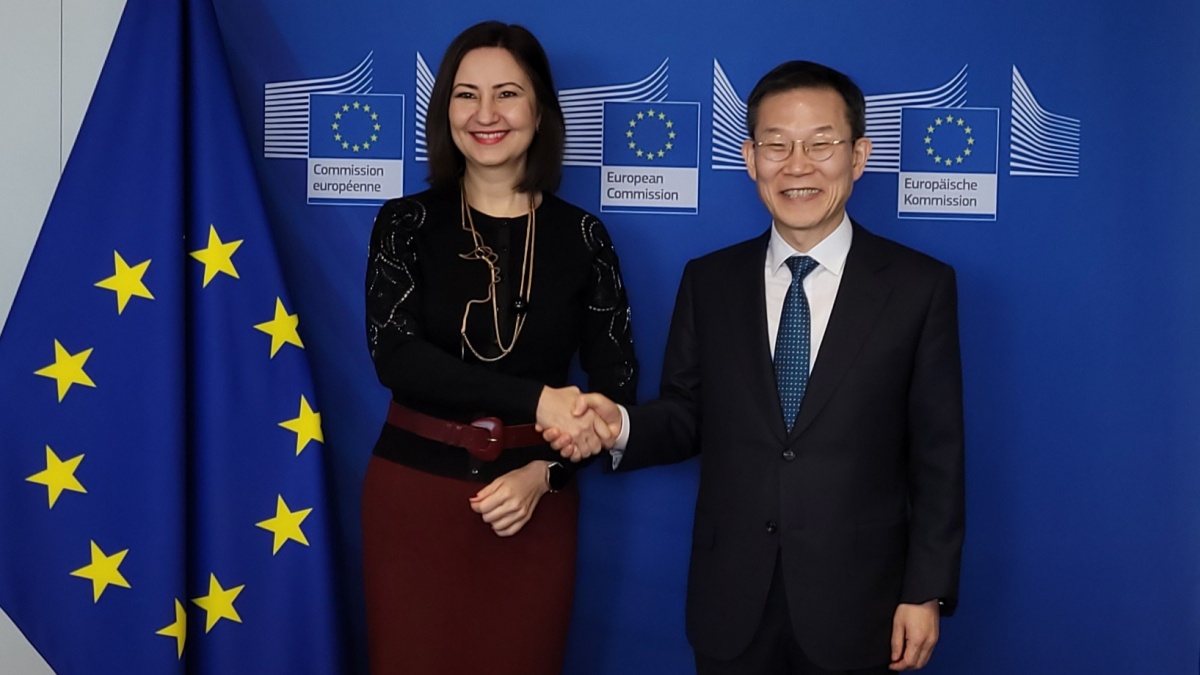
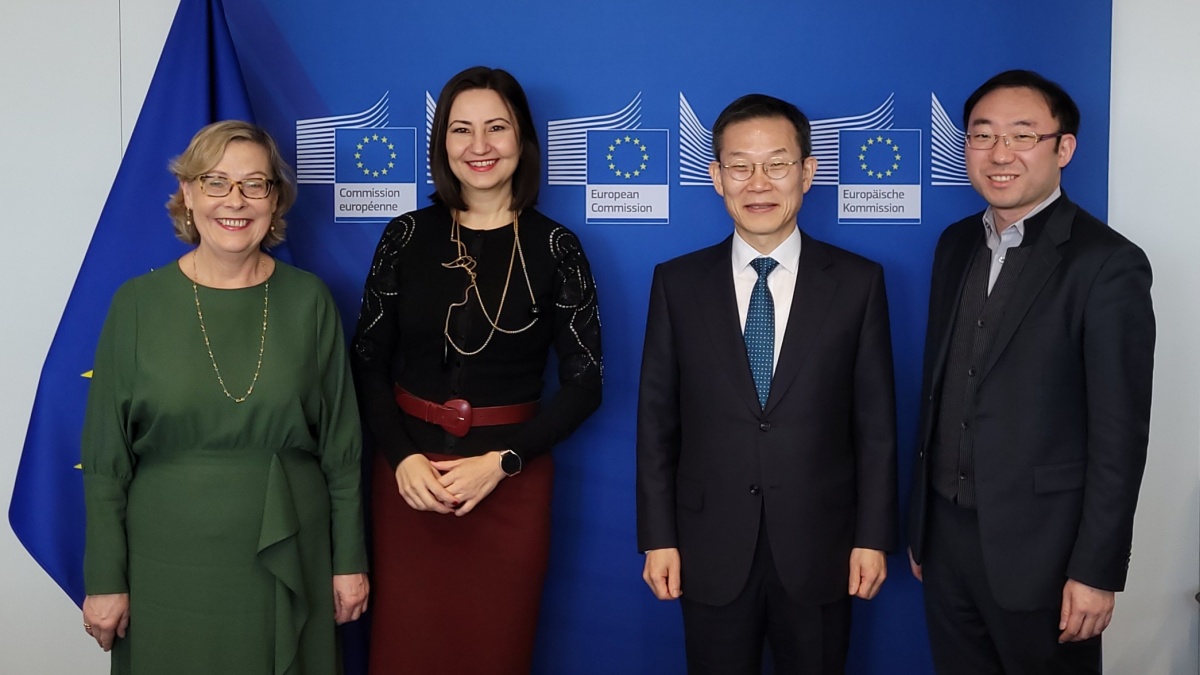
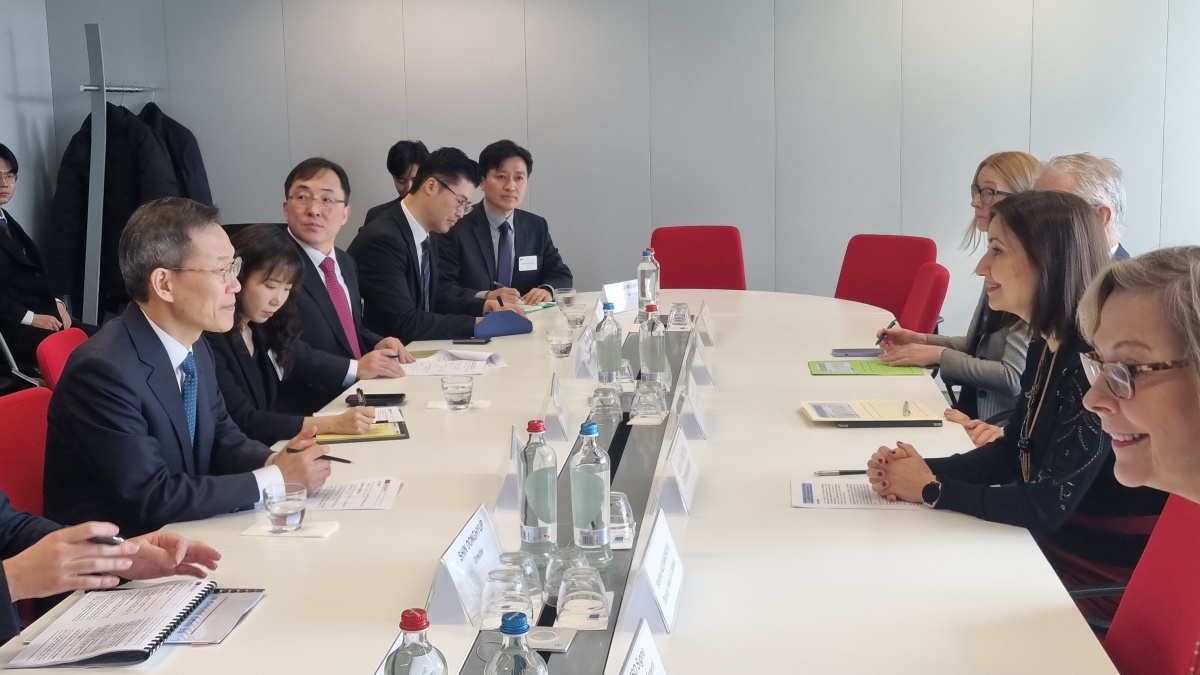
Minister Lee Jong-Ho of Science and ICT met with Iliana Ivanova, EU Commissioner for Innovation, Research, Culture, Education and Youth of Directorate General for Research and Innovation of the European Commission on March 25. They announced the conclusion of the negotiations for Korea’s association to Horizon Europe and agreed to proceed with relevant domestic procedures on both sides for the signing of the association agreement.
Horizon Europe is the EU’s and the world’s largest multilateral research and innovation funding program for 2021-2027 with a budget of €95.5 billion. Whereas the EU’s previous framework programs only allowed EU Member States and overseas countries and territories (OCTs) linked to Member States to participate, with Horizon Europe, the EU proposed joining the program as an Associated Country to six non-EU third countries* that fulfilled their criteria, such as a good capacity in science, technology, and innovation, commitment to a rules-based open market economy, including fair and equitable dealing with intellectual property rights. Given that necessary procedures proceed smoothly without delay, Korea will become an Associated Country to the Horizon Europe program starting in 2025, making Korea the first Asian country and the third of six countries to join Horizon Europe, following New Zealand (2023) and Canada (2024).
* Korea, New Zealand, Canada, Australia, Japan, Singapore, and New Zealand
Korea will participate as Associated Country in only Pillar II of Horizon Europe, which conducts joint research to tackle global challenges and strengthen industrial competitiveness. Korea’s financial contributions as an Associated Country will be used to directly fund Korean researchers through Horizon Europe.
Under Korea’s current status as a non-associated third country, Korean researchers cannot directly participate in Horizon Europe calls, instead only participate as “Partners” of researchers from other member states or associated countries, and must bring their own funding for their research as Horizon Europe budget is not allocated to them. When Korea associates to Horizon Europe, Korean researchers will be able to apply for funding to carry out a Horizon Europe project as a “Coordinator” or “Participant,” on equal terms with researchers of EU countries, and it will become possible to receive research funding directly from the Horizon Europe budget without having to go through a separate domestic evaluation process. This will lay a robust foundation for joint research with EU researchers that possess excellent scientific and technological capabilities through Horizon Europe research calls.
Following the country’s association to Horizon Europe, the Korean government will strive to facilitate the participation of Korean researchers in Horizon Europe. This includes including expanding support for collaborative research planning with EU researchers prior to project calls.
The Minister of Science and ICT Lee Jong-Ho said, “Participating as an associated country in Horizon Europe, the world’s largest multilateral research and innovation program, will open up greater opportunities for both Korea and the EU to enhance research competitiveness through joint research.” He added, “We are committed to complete the process leading up to the signing of the association agreement by the end of this year, so that Korean researchers can start participating in Horizon Europe with an associated country status starting from 2025.”
SOURCE : MSIT Press Release